
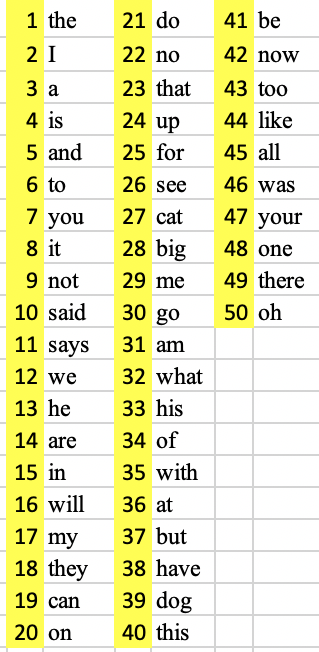
What is a Sight Word?
A “sight word” refers to a word that is a high-frequency word that can be fully sounded out phonetically or a word that is irregular and can only be partially decoded, and thus, needs to be learned by sight and memorization.
See full article here
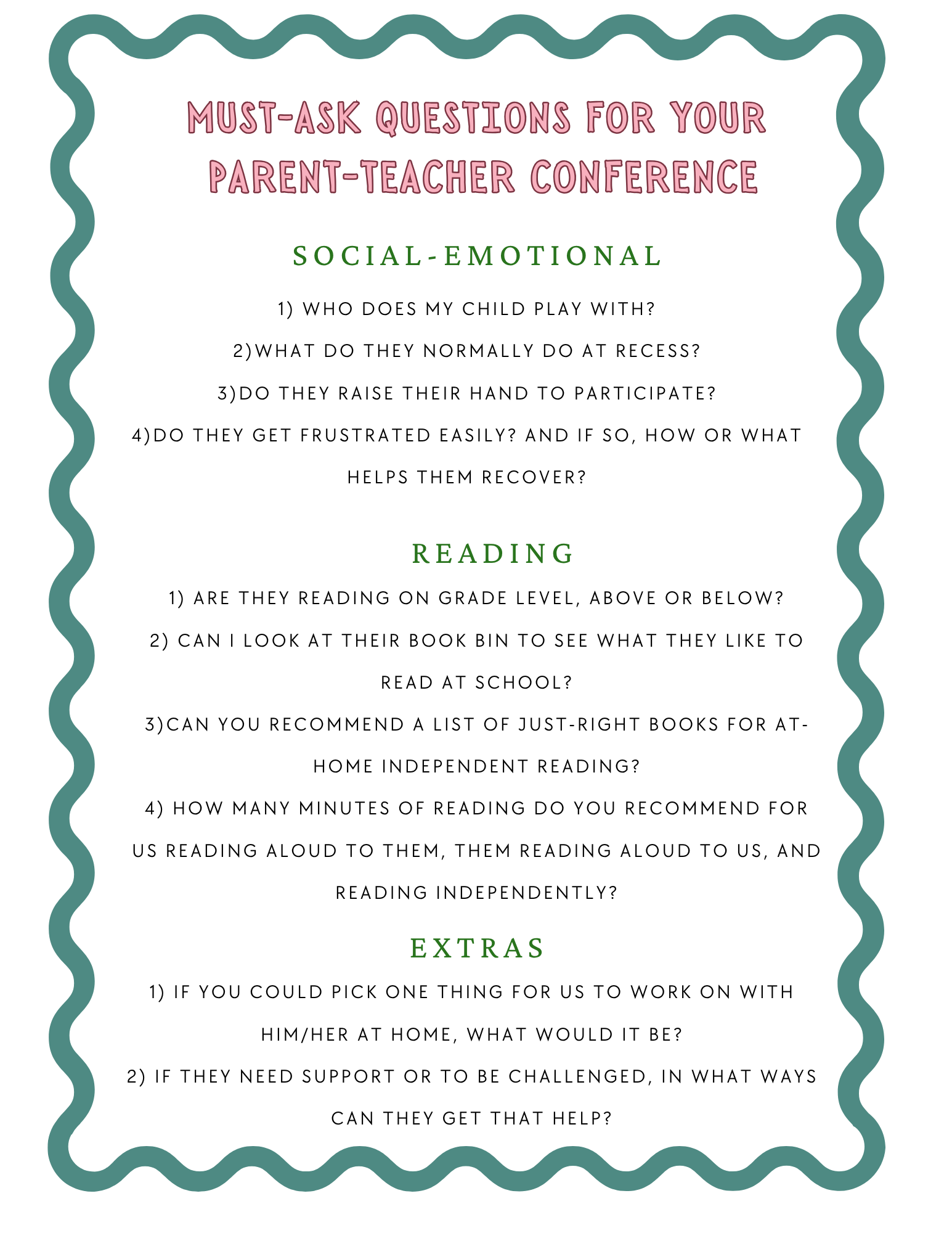
How to Prepare for a Parent-Teacher Conference
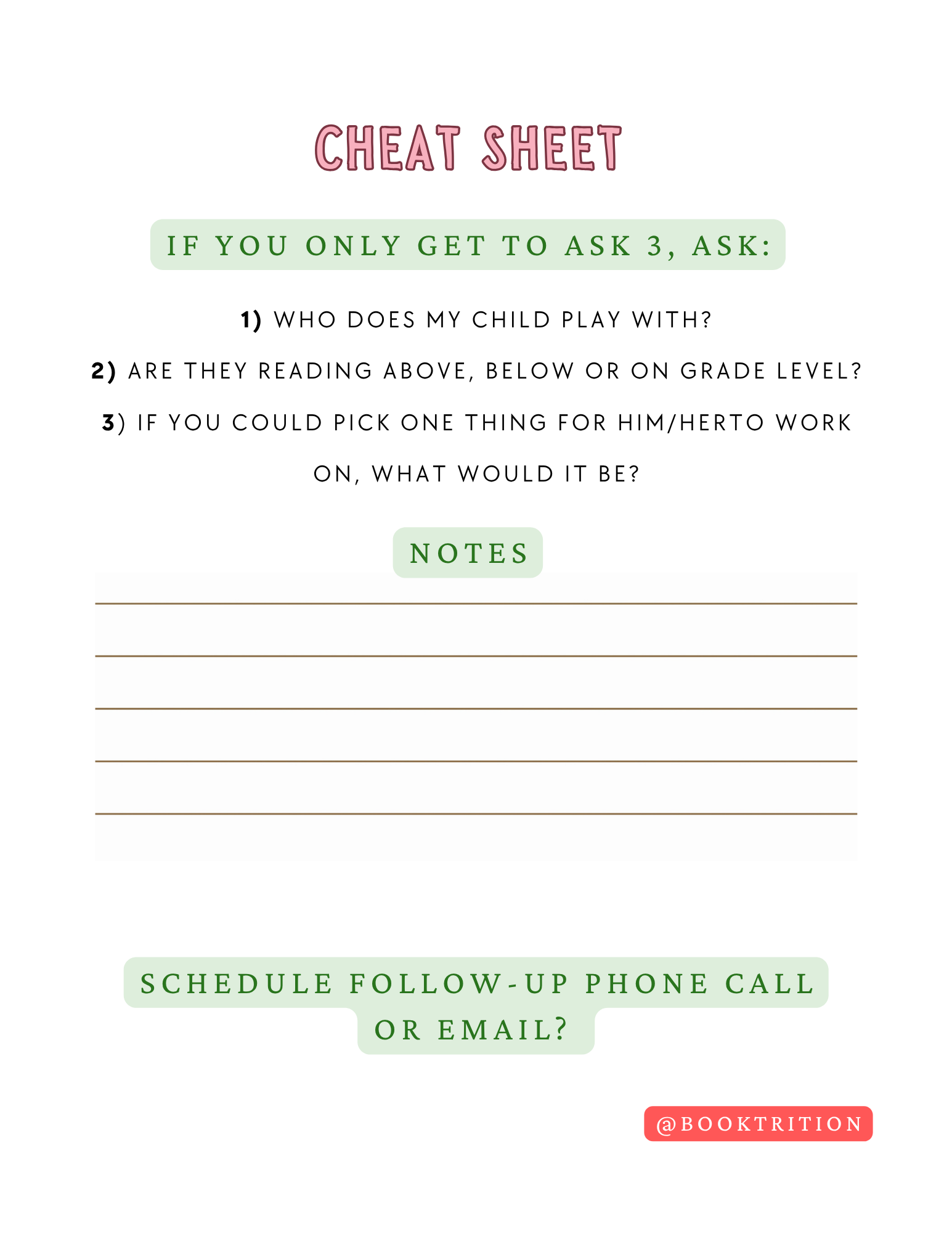
In order to make the most of your all-too-quick time with your child’s teacher, read through these questions and decide which ones resonate most with you. In an ideal world, we could ask all of these questions and more, but if you can’t choose, check out the “cheat sheet” questions. These three questions, while specific, lead to a broader picture of what your child looks like in the classroom in terms of academic and social-emotional well-being. And expert tip, and I’m saying this as a former classroom teacher, do not be afraid to follow-up! If there are questions on the list that you didn’t get to ask or you want to delve deeper on a particular topic, email your child’s teacher. And speaking as a parent now, do it shortly after the meeting before you put it off and forget!
What is the “DIBELS” Assessment?
ORF-ACCU, ORAL READING FLUENCY-ACCURACY: measures how accurately a child can read a short passage out loud and understand. The score is given as a percentage of accurate words/total words read.
ORF-WC, ORAL READING FLUENCY-WORD COUNT: measures how many words a child read accurately total in a short passage. The score is a raw score (and not a percentage), which can help to determine both how accurately and quickly a child can read the passage.
MAZE: measures a child’s comprehension of a short passage by reading silently. the child picks a word from three choices that would make the most sense when filling in a blank (i.e. “she went to get some (water/toys/markers) because she was thirsty.”
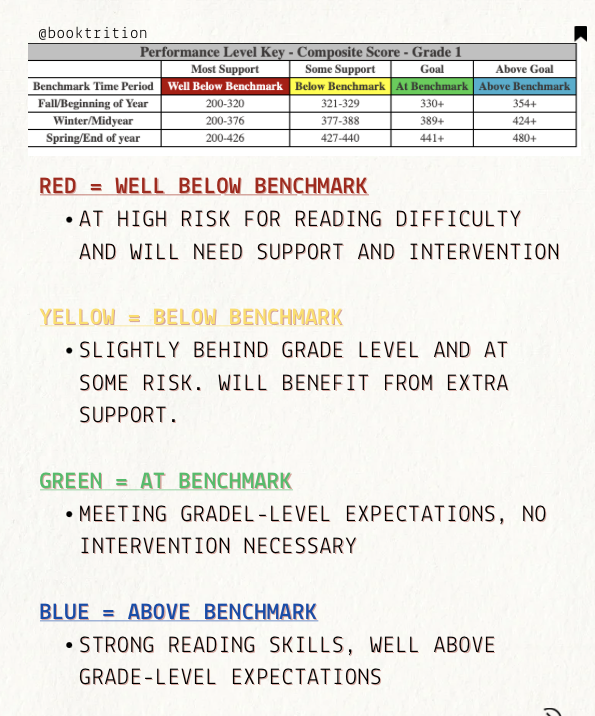
COMPOSITE SCORE: gives an overall indicator of reading proficiency by combining scores from all subtests. The score falls into one of four ranges as seen on the next page.
LNF - LETTER NAMING FLUENCY: measures how quickly a child can recognize and name letters
PSF - PHONEME SEGMENTATION FLUENCY: assesses a child’s ability to break words into individual sounds i.e. “cat” has three sounds: /c/ /a/ /t/
NWF - NONSENSE WORD FREQUENCY: measures child’s ability to sound out nonsense words (words that do not exist i.e. “faff”). This helps to indicate how a child can sound out words versus recognize words by memorization.
“DIBELS” stands for dynamic indicators of basic early literacy skills. The assessment is a progress monitoring tool that is usually given three times per year to students in grades kindergarten through third. “DIBELS” consists of multiple, short subtests and is used to monitor a student’s early literacy skills. The subtests most frequently used are:
What Does My Child’s Composite Score Mean?
The composite score is the overall indicator of reading proficiency and is calculated by combining the scores from all subtests. Depending on your child’s score, they will fall into one of the four ranges as seen in the chart, either: well below benchmark, below benchmark, at benchmark or above benchmark.
How Can I Find Books Based Off of My Child’s “DIBELS” Score?
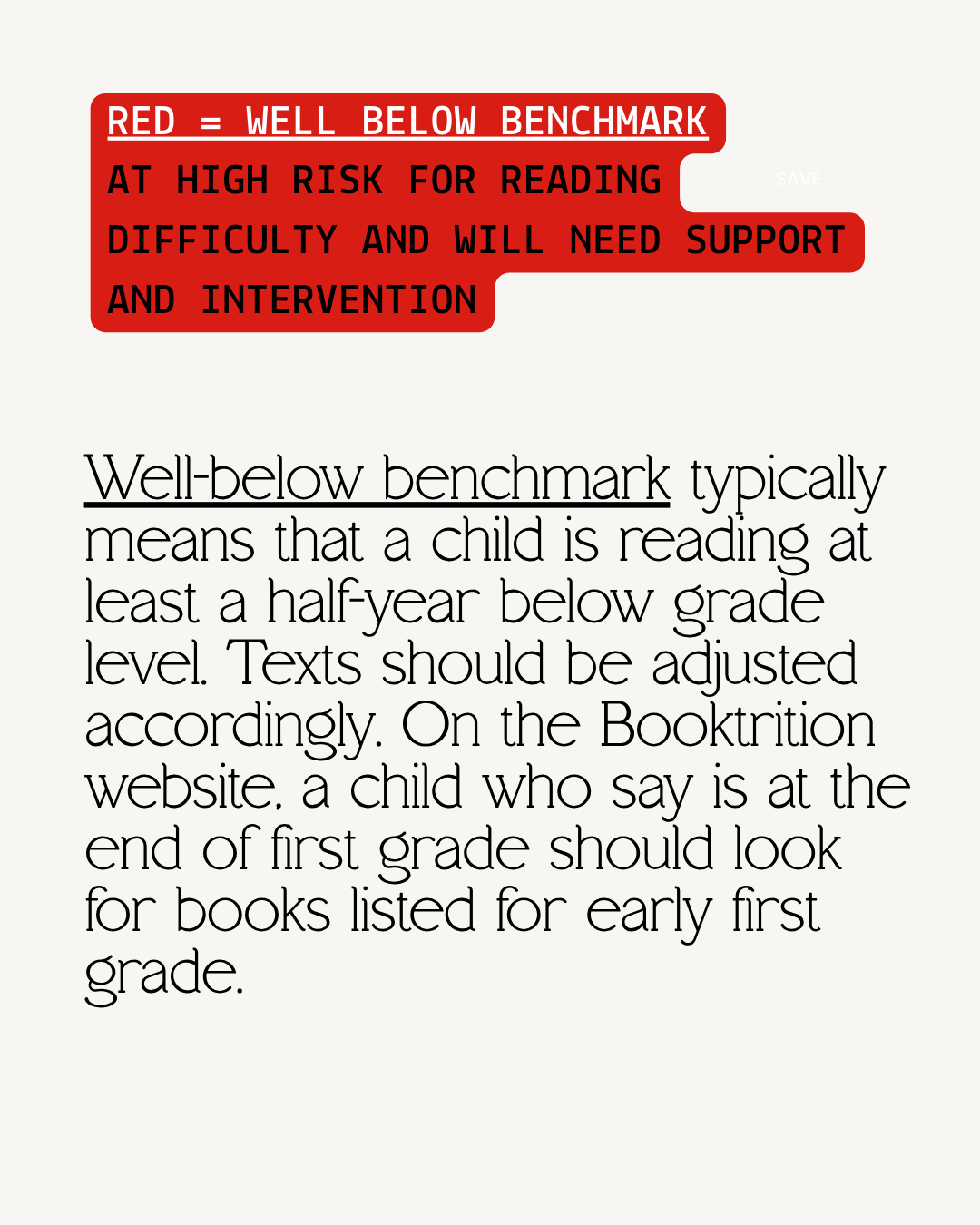
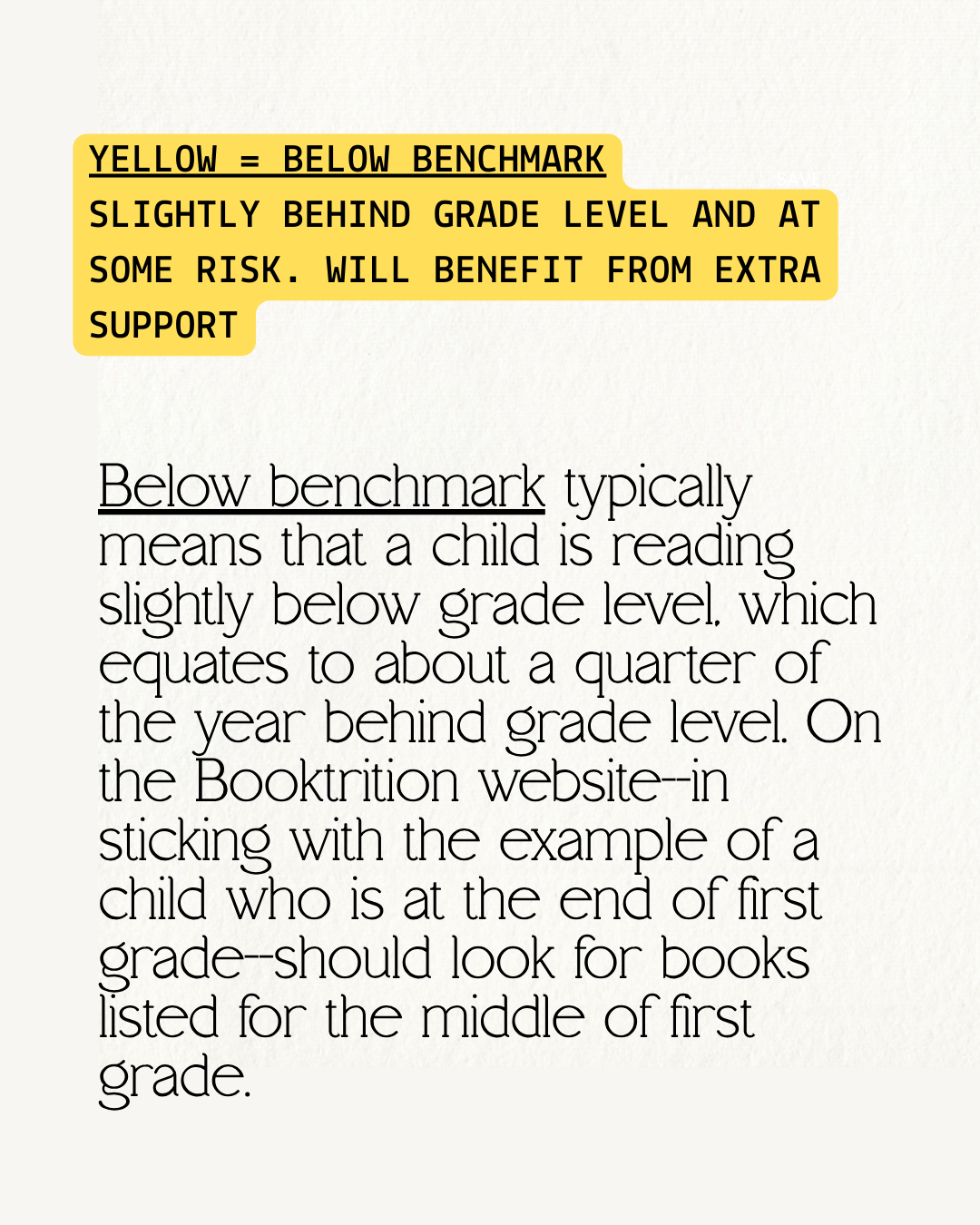
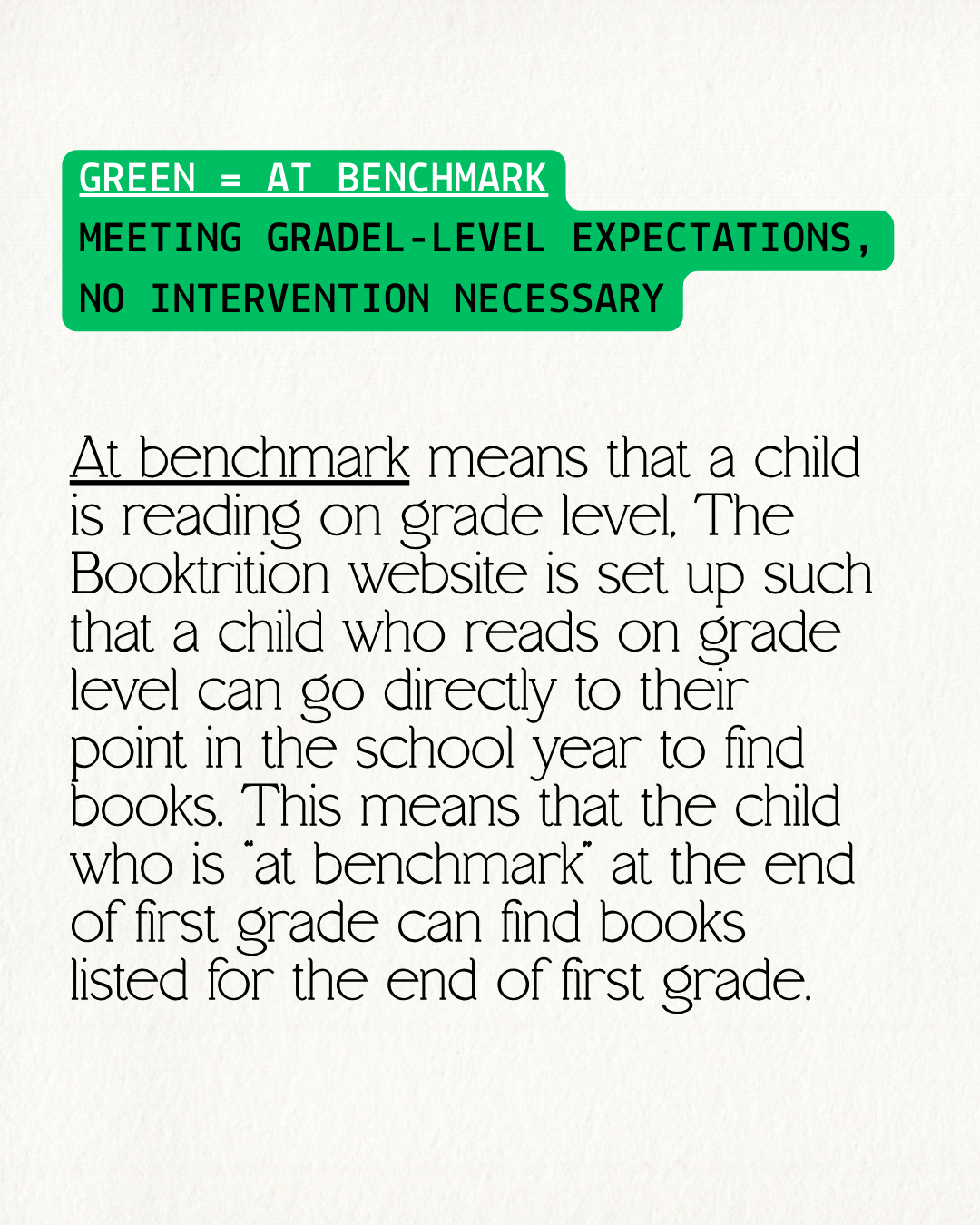
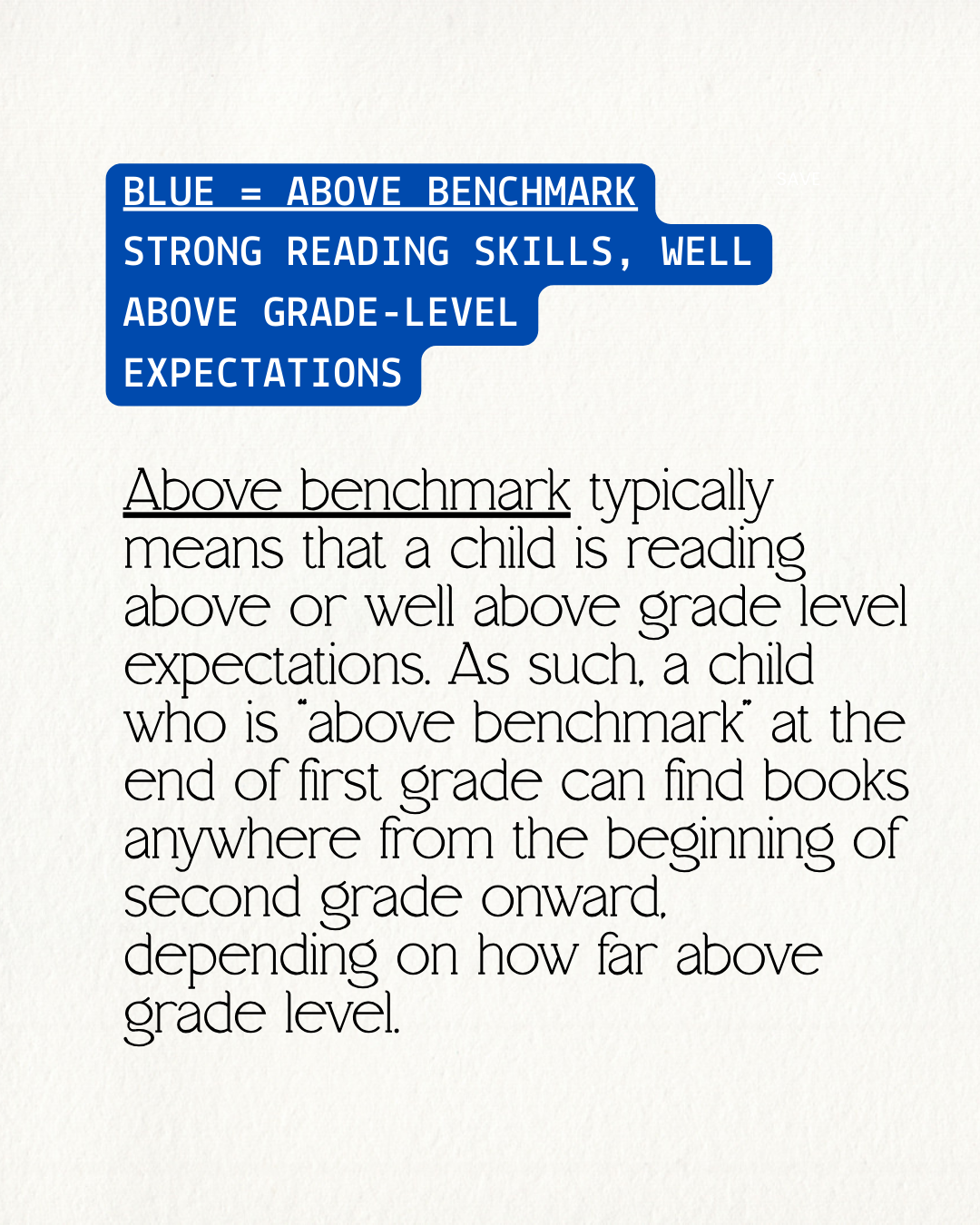
Question: Shouldn’t my child choose every book they read?

At Booktrition, we believe kids should read what they love—and what helps them grow. The right mix of enjoyment and challenge builds strong reading skills and a lifelong love of books.
But as many parents know, the books kids love aren’t always the ones that help them grow. That’s where you come in.
There are three key ways to support reading at home: you reading to them, them reading to you, and them reading independently. We call these the “Big 3” of raising readers.
The last two won’t apply much for kids in Pre-K and below—but as your child learns to read, they’ll become more important. On the flip side, parents often read aloud less as kids get older, shifting toward listening and independent reading in the later elementary years.